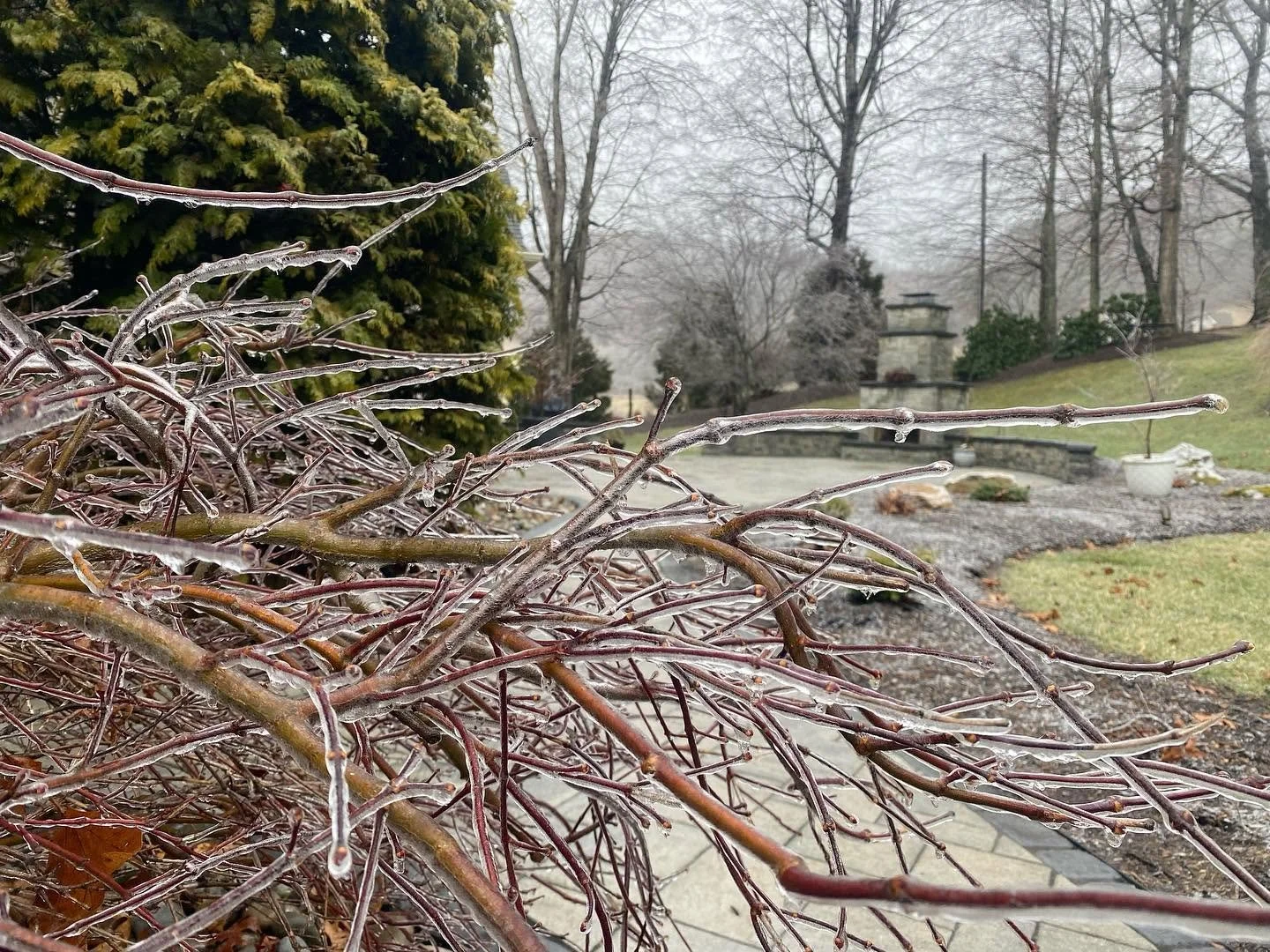
Fall is a beautiful time of year in North Carolina. The trees change color, the temperatures become more comfortable, and the landscape takes on a completely different look. But as the days get shorter and colder weather approaches, it's also time to start thinking about how your property will handle winter.
A little preparation now can help protect your plants, prevent landscape damage, and make getting your yard ready for spring much easier.
Whether you have an established landscape or recently completed a landscaping project, here are a few things to consider before the first freeze arrives.
Protect Newly Planted Trees and Shrubs
Newly planted trees and shrubs are often more vulnerable to winter conditions than established plants. Their root systems haven't had as much time to develop, making it important to give them a little extra attention before temperatures drop.
Continue watering newly planted trees and shrubs during dry periods in the fall. Even when temperatures are cooler, plants still need moisture to establish their roots.
A layer of mulch around the base of trees and shrubs can also help insulate the soil and protect roots from temperature fluctuations. Keep mulch a few inches away from the trunk to avoid creating excess moisture against the bark.
For particularly sensitive plants, additional protection may be necessary depending on the species and the conditions of your property.
Take Care of Your Landscape Beds
Fall is a good time to clean up landscape beds and remove debris that has accumulated throughout the growing season.
Dead annuals, fallen branches, and diseased plant material should be removed when appropriate. Leaving diseased material in the landscape can contribute to future plant problems.
However, not every plant needs to be cut back before winter. Some ornamental grasses and perennials provide winter interest, while their seed heads can offer food for birds and other wildlife.
Before cutting everything back, consider which plants benefit from being left in place until spring.
Don't Forget About Your Irrigation System
If your property has an irrigation system, preparing it for winter is an important part of seasonal landscape maintenance.
Water left inside irrigation lines, valves, or other components can freeze and potentially cause damage. Depending on the system, winterization may involve shutting off the water supply, draining the lines, and protecting exposed components.
The process can vary based on the type of irrigation system and the property, so it's important to follow the appropriate winterization procedures.
Address Drainage Before Winter Weather Arrives
Drainage issues can become more noticeable during the fall and winter, especially when leaves and debris begin collecting around the property.
Take a look at areas where water tends to collect after rain. Check around foundations, walkways, patios, retaining walls, and other landscape features.
Clearing debris from drainage areas and addressing problem spots before winter can help reduce the risk of standing water, erosion, and other issues.
Properties with slopes may require additional attention, particularly where water flows toward structures or through landscaped areas.
Keep Up With Falling Leaves
Leaves are part of the beauty of fall, but allowing them to accumulate too heavily can create problems for lawns and landscape beds.
A thick layer of leaves can block sunlight and restrict airflow, potentially damaging the grass underneath. Wet leaves can also become slippery on walkways, patios, and steps.
Regularly clearing leaves from high-traffic areas and lawn spaces can help keep your property looking its best.
In some landscape beds, a light layer of leaves can be beneficial. The key is managing the amount of debris rather than removing every leaf from the property.
Think Ahead to Spring
Winter preparation is also an opportunity to evaluate your landscape and identify areas that could benefit from improvement.
Maybe a planting bed needs to be redesigned. Perhaps a walkway has become difficult to navigate, or a sloped portion of the yard could be more functional with a retaining wall or terraced design.
Fall and winter are excellent times to begin thinking about larger landscape projects so you can develop a plan before the next growing season.
Get Your Landscape Ready for Winter
Preparing your landscape for winter doesn't have to be complicated. Taking care of plants, clearing debris, checking drainage, and protecting vulnerable landscape features can help your property transition into the colder months.
If you're considering improvements to your landscape, Timber Creek Landscaping can help you evaluate your property and plan for the season ahead.
Contact Timber Creek Landscaping to discuss your landscape maintenance and design needs.